
Uranus's new moon and science's tireless gaze
30 October 2025 · 2 min read
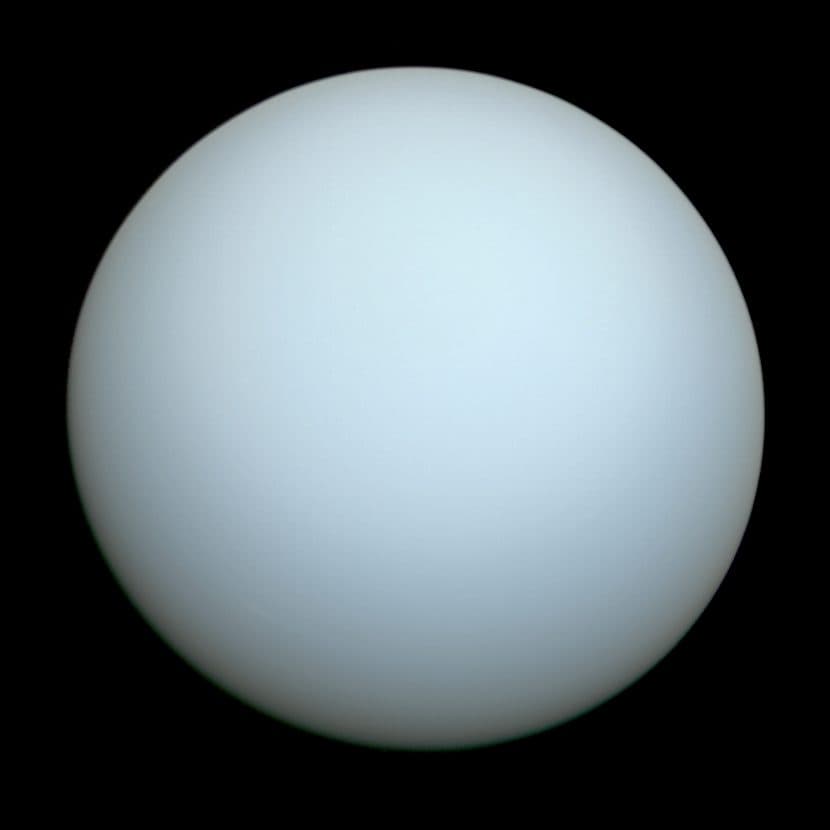
A moon is a celestial body that orbits a planet. It can be large, like our own Moon, or tiny, like a cosmic rock tagging along with a giant. Uranus, meanwhile, is a cold gas giant, the seventh planet from the Sun, distant, wrapped in bluish tones caused by methane in its atmosphere. It's the third largest planet in the Solar System and, until recently, was known to have 28 confirmed moons.
The James Webb Space Telescope, the most powerful ever placed in orbit, has changed that number. In February, during a series of observations, it detected a new, faint moon orbiting Uranus. The discovery was announced by NASA: the small satellite is about 10 kilometres in diameter and had gone unnoticed by the Voyager 2 probe, which visited the planet about forty years ago. Its faint light and small size explain its long disguise among the shadows of space.
With this one, Uranus now has 29 moons. The others bear names inspired by characters from William Shakespeare and Alexander Pope, but this one is still awaiting a name. Half of them are small and stay close to the planet, as if dancing around an invisible centre.
NASA's Voyager 2 probe was launched on August 20, 1977, with the goal of exploring the giants of the Solar System. Onboard is also the famous golden disc, the Voyager Golden Record — a gold-plated copper disc containing about 115 images, sounds from Earth (such as waves, thunder, birdsong), greetings in 55 languages, and a selection of music from various cultures. The goal is to communicate our existence and the planet Earth to any intelligent life form that might one day find it.
Every new discovery like this one reminds us of the persistence of science. Even in the icy silence of Uranus, there is always something more to reveal. The James Webb, with its patient and precise gaze, expands our understanding of the cosmos and reminds us that the unknown keeps expanding, inviting us to search, to question, and to marvel.


Luís Monteiro
Doctor and science communicator