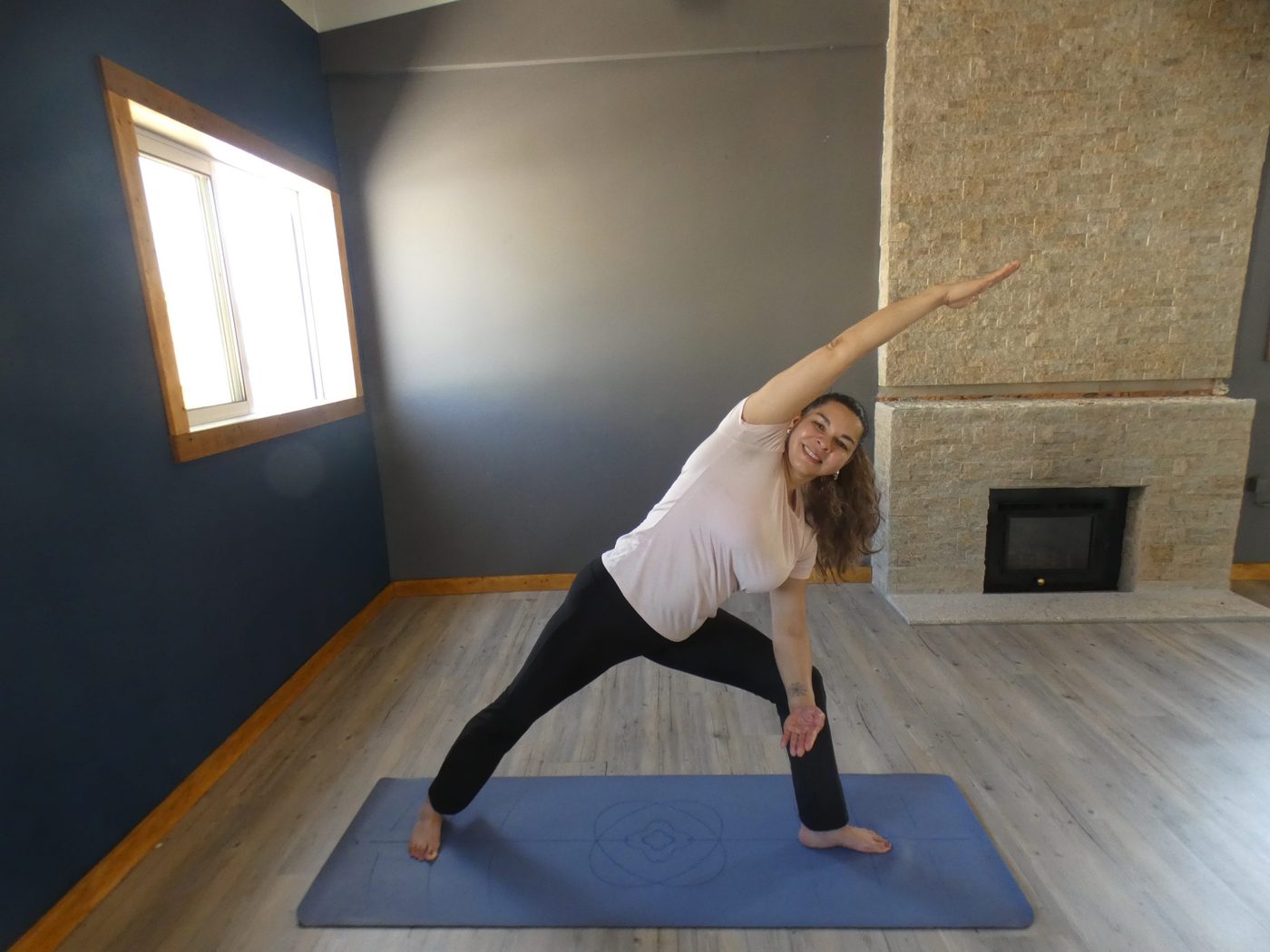
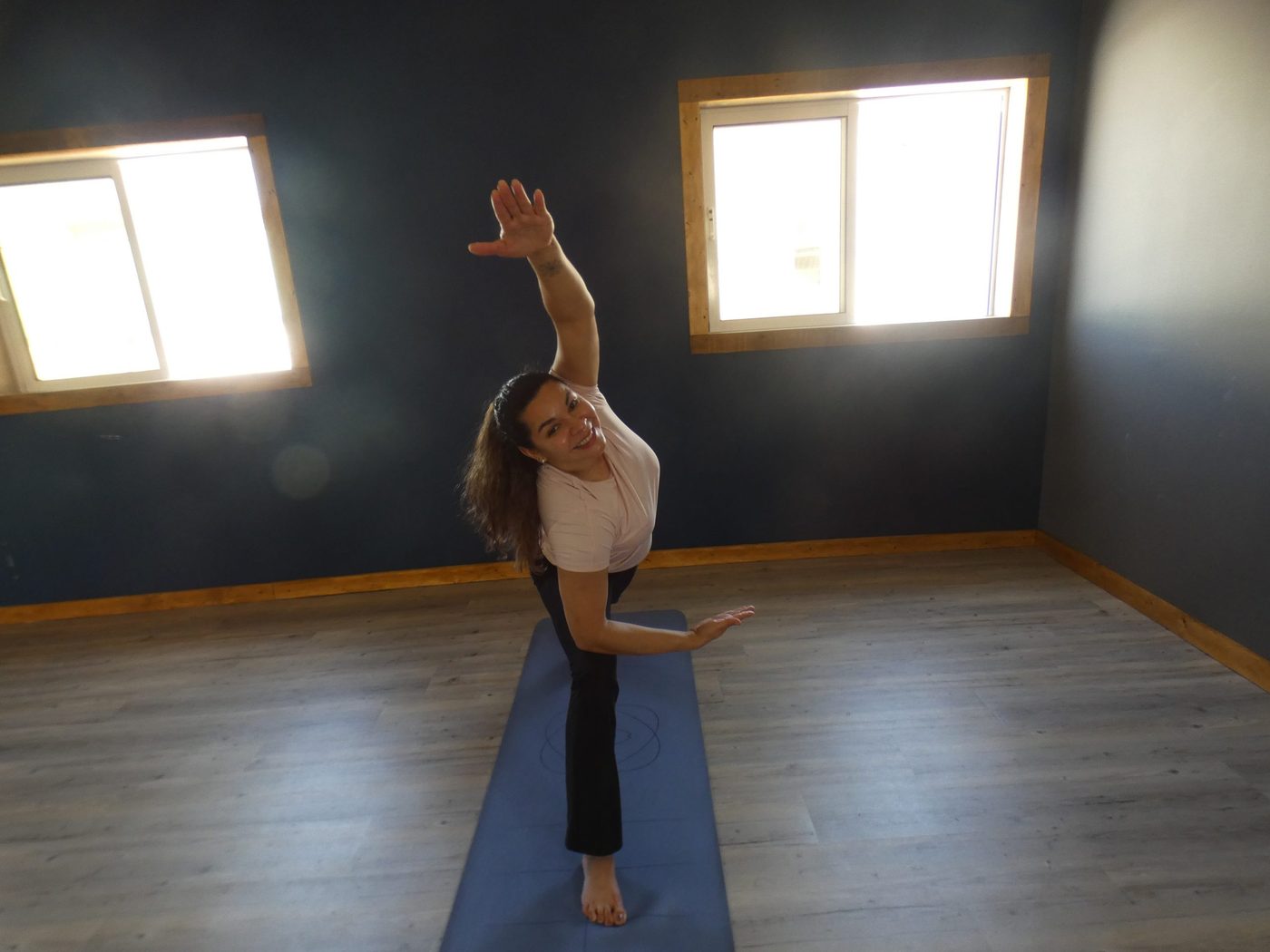
Interview with Luciana Ruis: "Yoga is for everyone and goes beyond the mat"
22 June 2026 · 10 min read
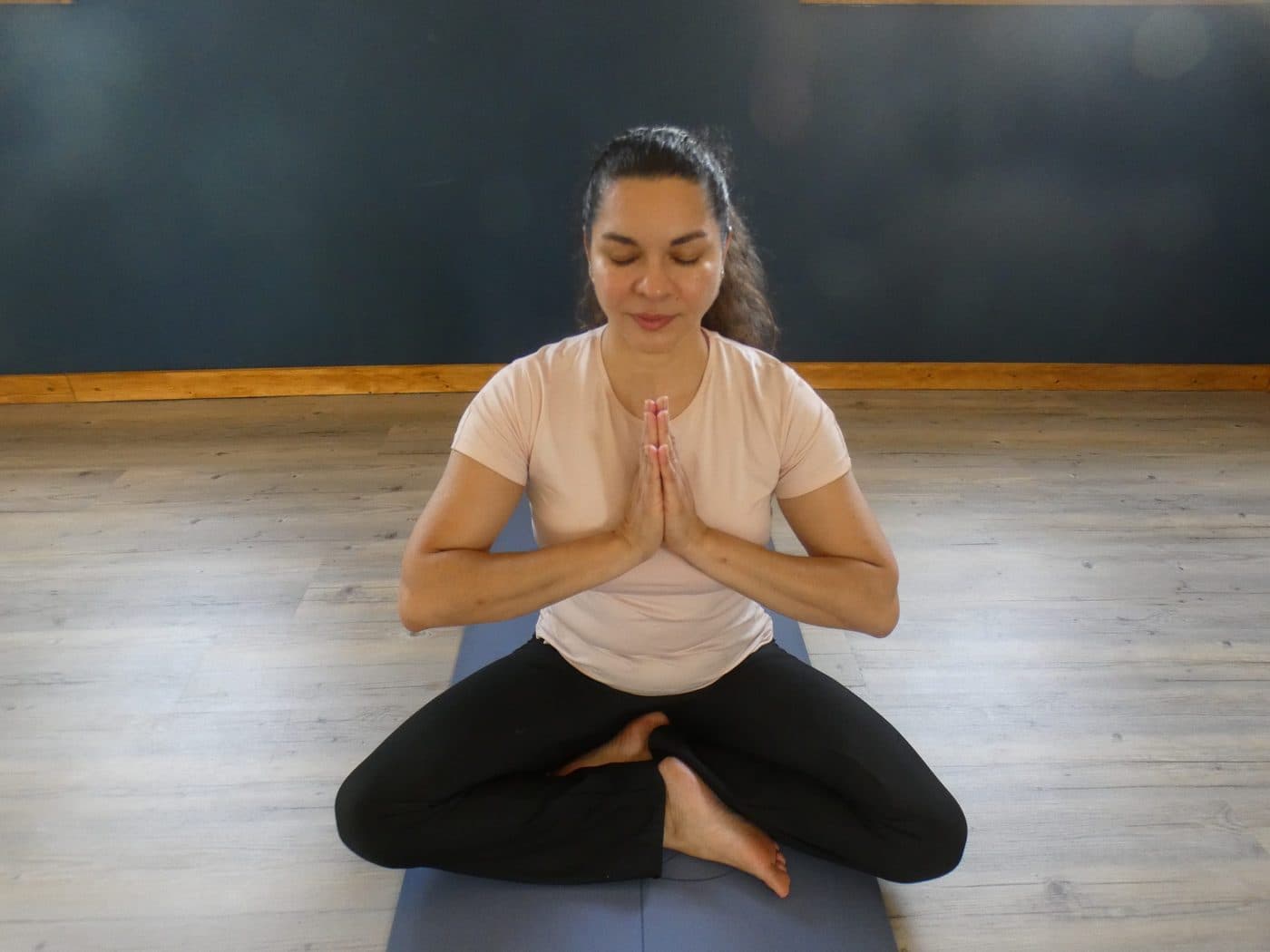
 Yesterday, June 21st, marked the Summer Solstice, the longest day of the year. It also marked International Yoga Day, with a practice session at 10am in Mata das Alminhas, in Nelas.
We went to talk to Luciana Ruis, a yoga teacher at Ginásio Prostar in that same town, where she teaches Hatha Yoga. Hatha is a word derived from Sanskrit with an ancient tradition, where Ha means Sun and Tha means Moon.
In a long and very enriching conversation, we discussed the meaning of yoga and the impact it can have on a person's life, both physically and in terms of mental health and harmony with the Cosmos.
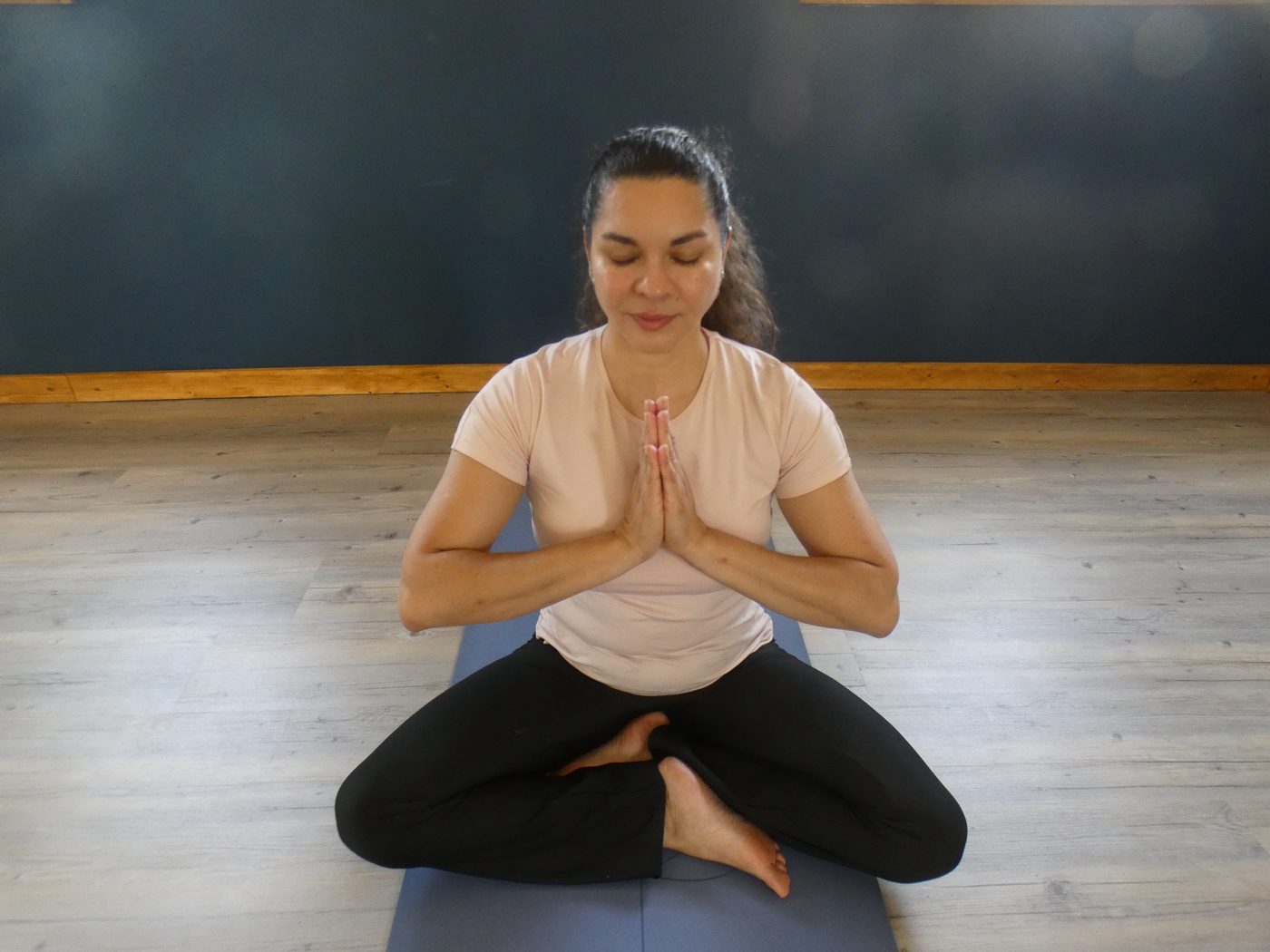
Yesterday, June 21st, marked the Summer Solstice, the longest day of the year. It also marked International Yoga Day, with a practice session at 10am in Mata das Alminhas, in Nelas.
We went to talk to Luciana Ruis, a yoga teacher at Ginásio Prostar in that same town, where she teaches Hatha Yoga. Hatha is a word derived from Sanskrit with an ancient tradition, where Ha means Sun and Tha means Moon.
In a long and very enriching conversation, we discussed the meaning of yoga and the impact it can have on a person's life, both physically and in terms of mental health and harmony with the Cosmos.
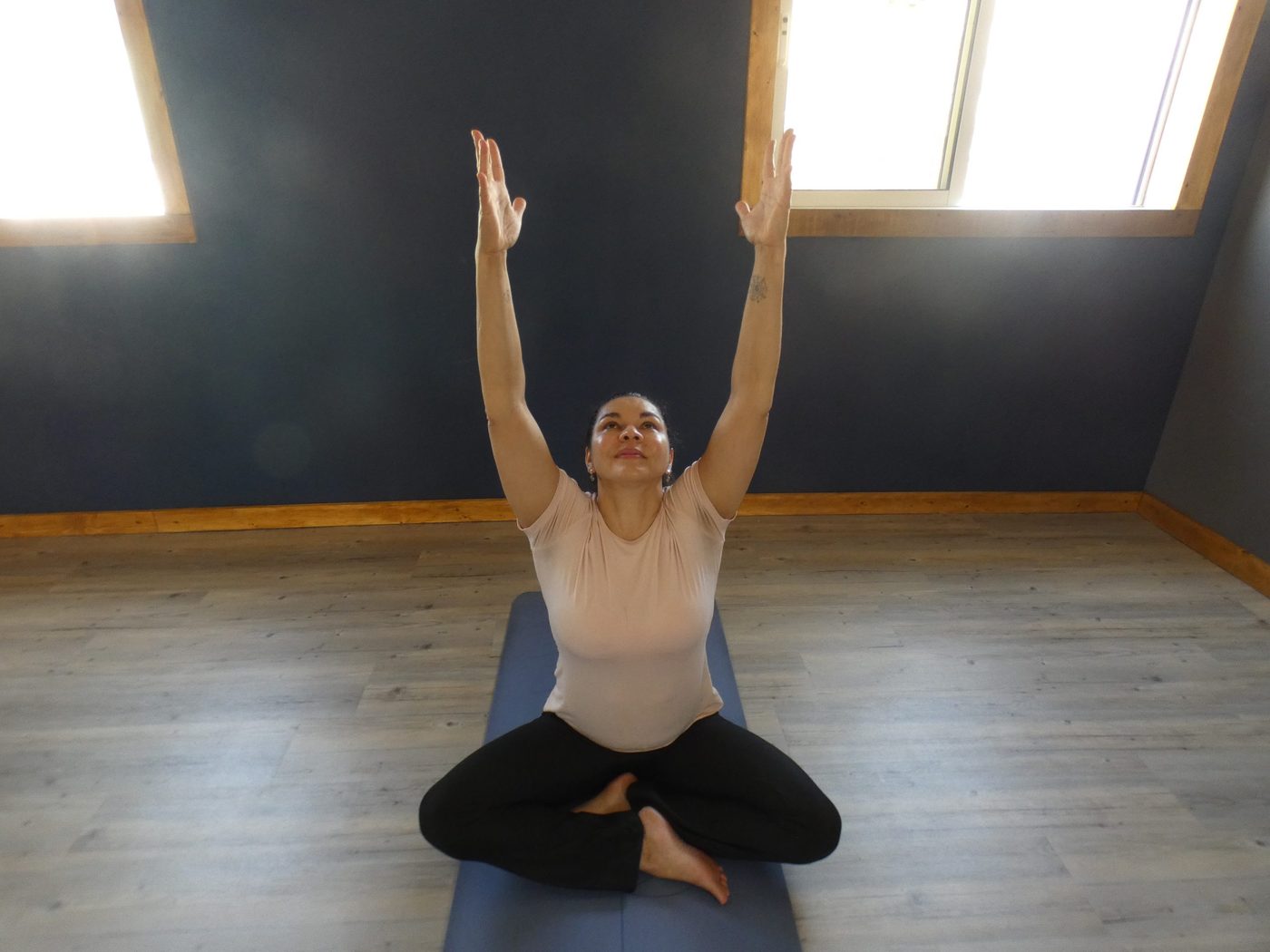
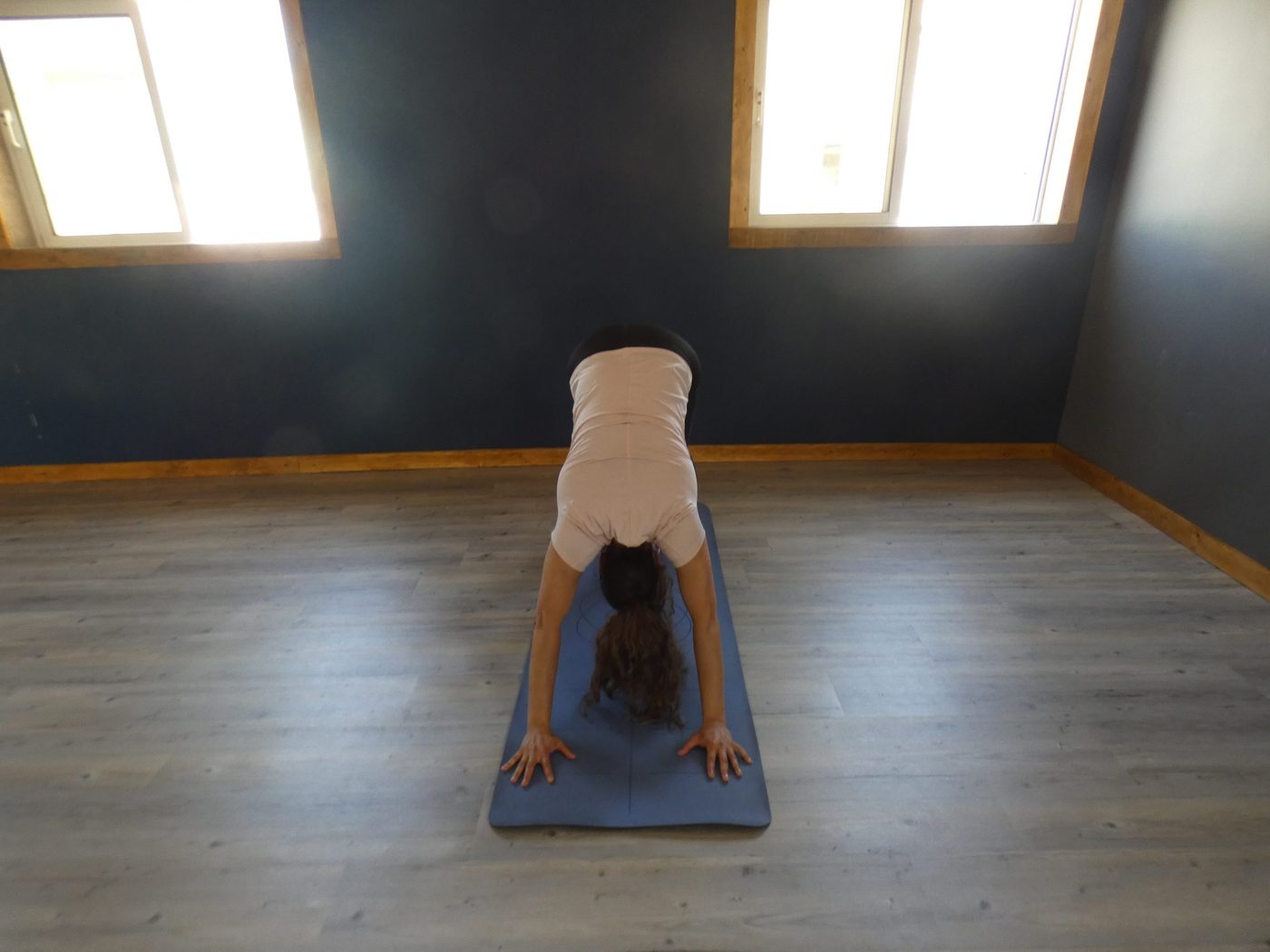
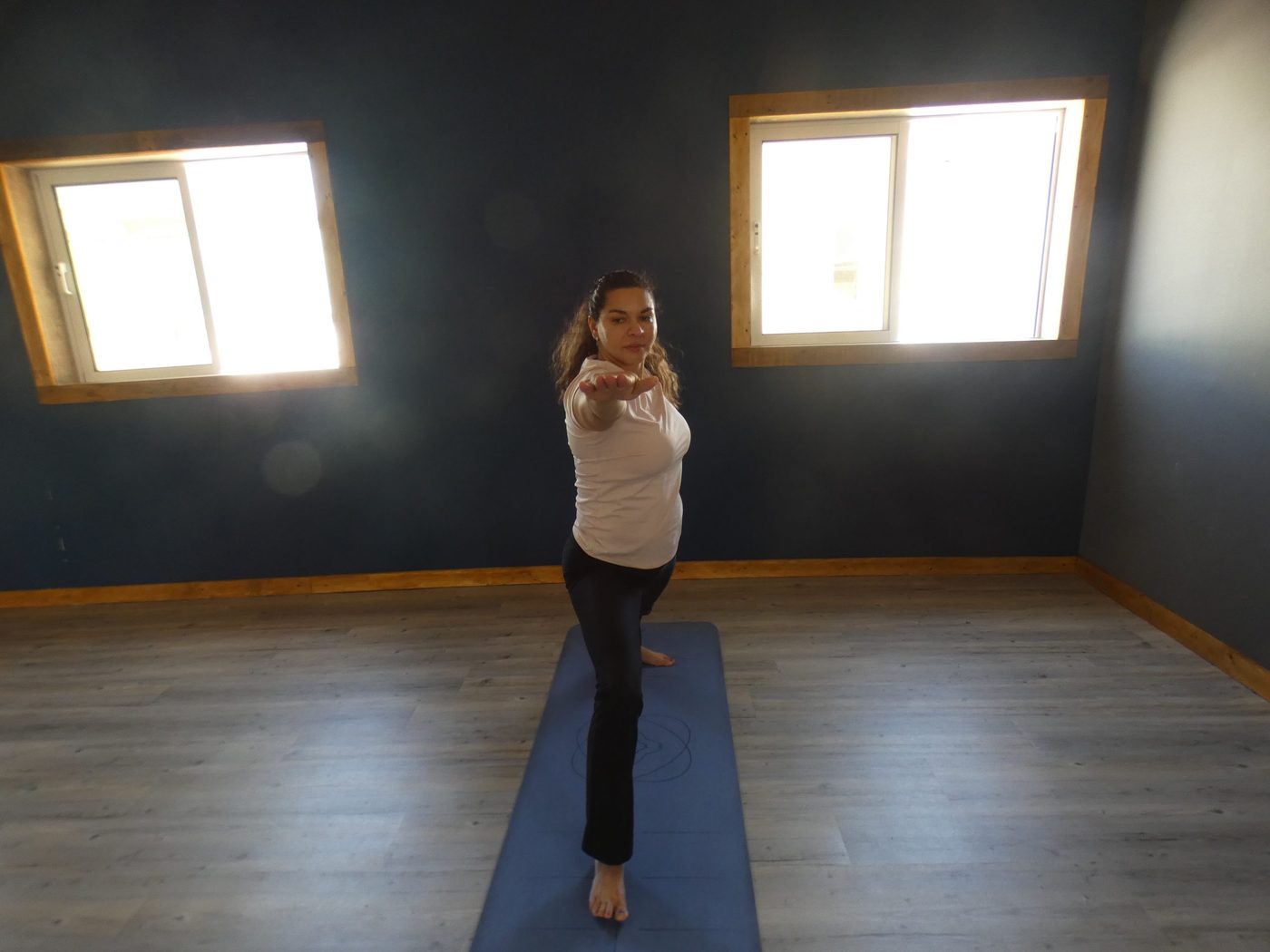
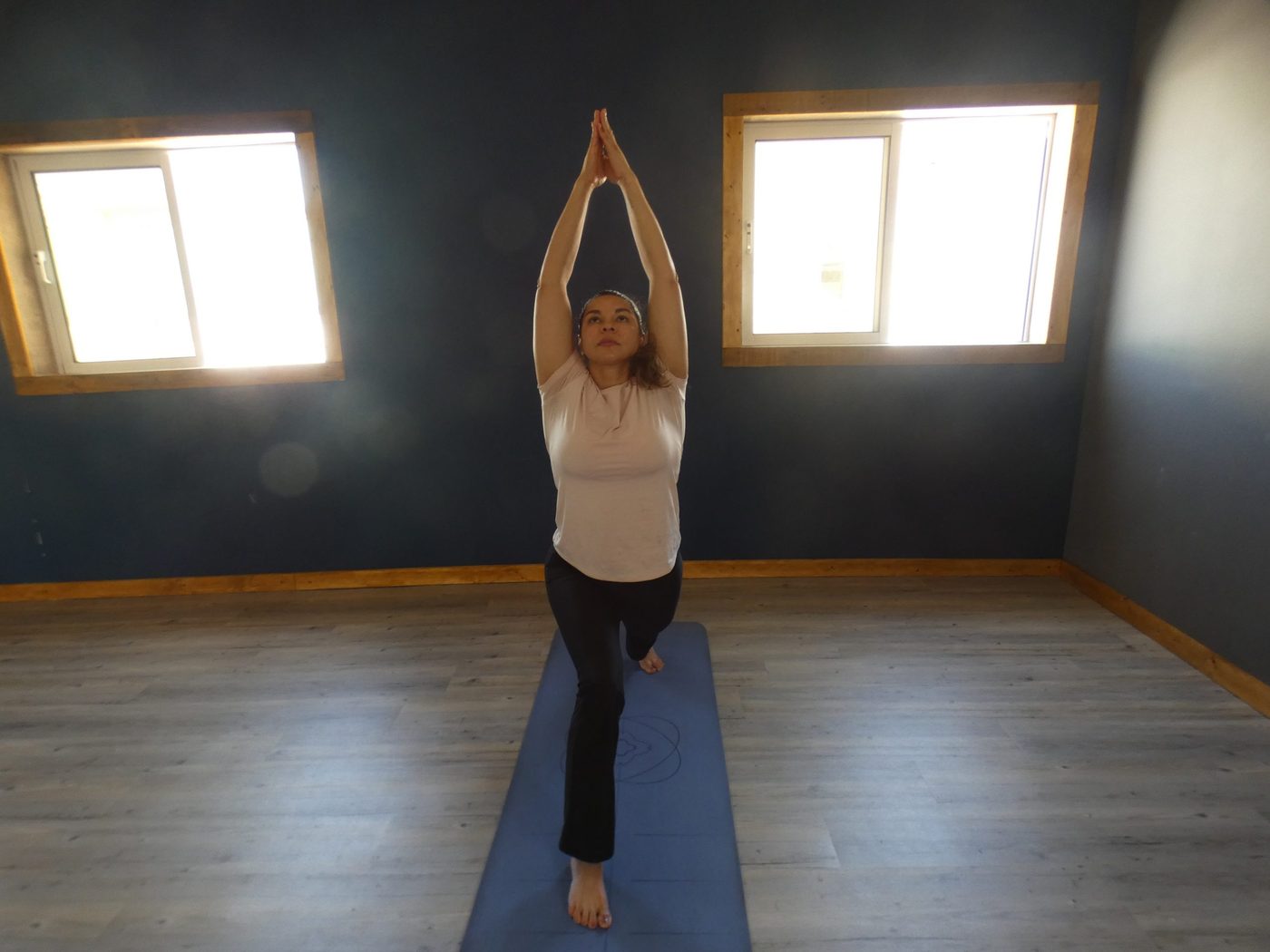
1) Luciana, what does yoga mean to you, and what led you to Hatha Yoga, which has a spiritual, awareness and unity component? Yoga is for everyone, it's the union of body, mind and spirit. I often say that yoga goes beyond the mat — it's a philosophy that covers several concepts developed by Patanjali. It has ethical principles we must respect, some directed at the world and others at ourselves. In the first, the Yamas (social conduct), we have non-violence, not lying, avoiding excess, taking care of our inner energies (hunger, anger, desire). These are the moral precepts each of us should look at in order to evolve. In the second, the Niyamas (personal observances), we have self-study, seeking inner truth, one's dharma (purpose and mission in the world). Asking yourself who am I? "Is there some being behind this skin?" Be witnesses to yourselves, the essence that lives behind every subtle and concrete layer. Yoga is many things, but it's really the essence behind all those layers, from the subtlest to the most concrete, to the most material, which is our body. I came to yoga through the body, not through the aesthetic side, but through the movements and positions, which I saw as a challenge. Philosophy also attracted me — I've always loved Philosophy — and it was a gym teacher who taught me and led me into this practice. I started studying and noticed how coordinating breathing with the body helped me out there, in a stressful situation, in a delicate moment, in a difficult life situation, and I, with some effort and in a search that never ends, began to understand the reason behind each asana (posture). Because it isn't just about moving the body in a certain way: it's an attempt to organise the mind, leave stress outside, and reach balance. I learned that yoga is, above all, a way of life."Be witnesses to yourselves, the essence that lives behind every subtle and concrete layer".
2) The use of various asanas (postures) and pranayamas (breath control techniques) is seen as a path to balance between body and mind. In a society that tends toward immediacy, is time for ourselves more necessary than ever? We all have the same 24 hours and we're always doing so much, we're getting sick as Humanity. Yoga isn't a religion or worship, but we need to stop and leave the routine outside. We need that to look at ourselves as fragile and cyclical beings, not eternal ones. We only have the present moment, and we live disturbed and overloaded with information, with knowledge that rarely turns into wisdom. Stopping, thinking, returning, understanding, studying — it becomes wisdom from the moment I apply it to my life. Knowledge is something more consolidated; wisdom is when we actually live it. Through yoga I have tools to be present, to get in touch with my emotions without them controlling me. It still happens that they take over, but the path of yoga is not for those who are perfect — it's for those who are imperfect, and we all are. So, you know how when we slowly clean a dusty chandelier piece by piece and it starts to shine a little more? It's meticulous, constant work, but what matters is being on the path. Where exactly we are on the path is just a detail. The path to samadhi (liberation of the ego) is the same for everyone. We're in touch with something purer within us and directing our energy toward a purpose. Yoga puts us face to face with who we really are, if we allow it. Our light and our shadow. Yoga is everything that brings us into a state of presence."The path of yoga is not for those who are perfect — it's for those who are imperfect, and we all are. Yoga is everything that brings us into a state of presence".
3) What benefits have you felt from regularly practising yoga, and what would you tell future students interested in trying it? First of all, the state of presence is made harder because we live constantly monitored, connected, but often without meaningful contact with the people around us. So, I'd say, the social aspect, in a group context, in terms of patience, respect and care for yourself and others. Then, homeostasis (the body's ability to maintain its internal balance), moods, metabolism and breathing. If we pay attention to how we breathe, we can help regulate mental states and many other things: sleep cycle, blood pressure, endocrine issues, the abdomen and digestive system. Physical, emotional, mental, social differences and emotional self-care balance naturally start to show. Yoga also strengthens joints, works on stretching, and tones the whole body. While on the mat, the world stays outside — we do pranayamas, cleansing techniques, meditations: all to regulate the mind and prevent mental oscillation. With regular yoga practice, which varies for each person, the goal is to prepare the mind for meditation. The sages in India didn't need mat yoga because they were already better prepared to sit and meditate. Meditating isn't the absence of thoughts, it's the absence of oscillation. The asana (posture) is preparation — aligning our body and mind is a preparation. Meditation is a technique of self-knowledge. "Who am I not? Am I my body?" So there's a moment when you sit to meditate and different levels of meditation arise, you start asking questions to some being inside, and sometimes the mind starts talking until it questions the answers that come, and the mind falls silent. At that moment, you truly enter a state of meditation. Of course, feelings of frustration or self-demand can arise, but observe yourself, take the focus off instability, and remember that the first non-violence must be toward ourselves."Observe yourself, take the focus off instability, and remember that the first non-violence must be toward ourselves".
"I believe everything that was created has a purpose, a talent, aligned with the Creator, and I am part of that creation — everything is sacred."
4) Hatha comes from Sanskrit, joining Ha (Sun) and Tha (Moon). Do you believe everything in the Universe and in human well-being works through a relationship of complementarity?
Yes. I love this question and it's quite complex. In Yoga there's a dualistic and a non-dualistic view. In the dualistic one, divinity, the creator (Shiva, Shakti, whatever it may be) is external to me — there's a me-God relationship, of separation. In the non-dualistic view, I am part of God, I commune with this entity, I am part of its Creation. Personally, I identify wholly with the non-dualistic view — I find the concept of Dharma beautiful: living as it has to be lived because it is my nature. That's how I see it. Everything is Creation. Shiva, the masculine force, has to be in balance with Shakti — they're two sides of the same coin, complementing each other. For me, Shiva, masculine force, and Shakti, feminine generative force, must be in balance — they're like two complementary sides of a coin, and everything is Creation. I believe everything that was created has a purpose, a talent, aligned with the Creator, and I am part of that creation — everything is sacred, part of this ritual and philosophical line.5) What are your greatest inspirations and aspirations, in work and in life? In terms of Yoga, for me everything starts from the question "Who am I?", from detachment and the discipline of daily practice (sadhana) — not as something rigid, but with consistency, with flow, releasing emotional weight and moving into psychic motion. As inspirations I have Paramahansa Yogananda, Swami Sivananda and Maharishi Mahesh Yogi. I work in the corporate world, in Human Resources. Our lives are very turbulent, subject to swings, but with more self-knowledge than before I'm now much better able to identify troubled thoughts and projections, to stop and look. We're here to grow on different levels. I believe there were already yogic abilities within me and I didn't know how to use them. Each of us has a story — there's no better or worse, we're just at different points. I try not to over-identify, to practise active listening, but keeping the channel of light along the path I mentioned earlier clean. Not taking anything personally, carrying less emotional weight improves communication, stabilises things. We are transient, and aligning our principles at each point of our lives with detachment and discipline helps one feed the other. In the search for who I am, Maharishi has a little book where he says "I am not this body, I am not my skin" — essentially, asking questions until you reach what truly is. There are several paths to yoga, the entry point doesn't have to be just one thing. How I see myself as a person: I have two children, I'm married, and I believe development happens in a spiral, as Jung said — the past no longer exists, what exists is surrender (Shavasana), the attempt to align body and spirit. There are things we still can't deal with, and others where we notice something has changed, through the exercises and experiences that align the physical with our mind. I deeply appreciate Philosophy applied to daily life, I want to run retreats, have my own space, teach 2-hour classes because it makes more sense. In the future I'd like to guide the people who are with me, not by what I think, but through the students' own lived experience — to elevate yoga through the experience of the body and of life, and refine that union between individuation (getting to know yourself) and unity."I want to elevate yoga through the experience of the body and of life"
8 Steps of Yoga
Patanjali's Yoga
Yama (ethical and moral conduct) Niyama (rules of personal conduct) Asana (physical postures) Pranayama (breath control) Pratyahara (withdrawal of the senses) Dharana (concentration) Dhyana (meditation) Samadhi (liberation of the ego/enlightenment or total absorption)Suffering and contentment, according to Luciana
"The cause of human suffering is wanting to dominate everything, know everything, get ahead of everything. Of course pain happens, it's natural for human beings, but the yoga practitioner tends to eliminate suffering. If a stone appears on our path and we kick it, that's pain, but if I carry it with me, I'll be suffering. We should be in the present moment, respecting cycles, even amid frustration when the body doesn't obey. Naturally opening spaces in your body, without forcing, and seeing how your mind reacts. "Respect the body, everything is fine, I love this body". Placing yourself in a state of "I am here", only the now matters. It's the only way to eliminate suffering, because what we still don't know how to deal with persists — as Jung said, it's our shadow. It's important to let the mind reach a state of contentment called santosha, which I think is one of the most beautiful niyamas. If I'm here without appreciating the Sun outside, the surrounding atmosphere, without gratitude, without connection, I'm not present. On a rainy day, if I don't respect nature's cycle — which can sometimes be hard — same thing. When we say yoga goes beyond the mat, what matters is how your mind ends up, what awakened in you? Yoga isn't therapy, but it can bring to the surface issues we need to deal with. When we do some pranayamas, we activate energy. We're on the path to samadhi, pure, where we see on our horizon the energy and purpose we have on this Earth. Where we manage to find peace amid chaos — samasthiti.Paula Cristina Gouveia