
Interview with Daniela Sá: "I'm learning to listen to myself more"
22 April 2026 · 14 min read
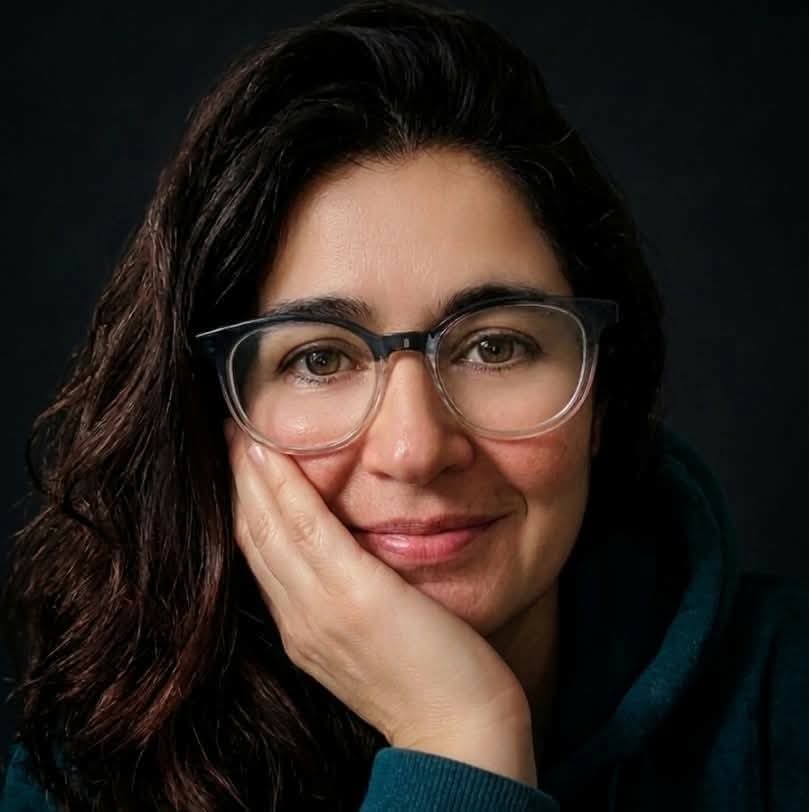
 Daniela Sá was born on July 6, 1989; a prolonged birth caused her spastic cerebral palsy, resulting in progressive motor impairment and limited mobility.
On her Instagram, she shares thoughts not only about disability, but also about the state of the world, her faith, her sense of humour, political opinions, and even comments full of irony.
We got to know Daniela a little better:
1. You describe writing as "a therapy, a way to dwell in places of boundary, restlessness and discovery". You have a beautiful line: "We are presidents of our own conscience, we are managers of our own bank of affections. After all, we hold immense power". Would you like to talk a little about who Daniela is, starting from there?
For me, writing is very much a way of organising myself on the inside. There are moments when I don't even know what I'm feeling, and writing helps me understand, to put a name to things. It's a space that's very much my own, almost like a refuge, where I can be truly honest.
That line speaks a lot to that... to realising that, even in the middle of confusion, there's a part of me that gets to choose. I may not control everything that happens to me, but I always have some responsibility over what I do with it, over what I hold on to and what I give to others.
Daniela is someone who feels a lot, who also thinks a lot, and who is constantly under construction. It isn't always easy, but there's a strong will to be truthful, to not run away from what I feel. And writing is that place where I find myself, sometimes where I also confront myself, but deep down, where I always come back to me.
2. You have a genuine fascination with Nature (sunrise and sunset, the sea, plane trails in the sky, the moon, the feeling of freedom when gliding over a pool, your deep respect for animals, plants, the planet, the universe, bacteria and atoms). Do you believe seeing the world from this broader perspective helps you put your daily problems into perspective?
Yes, definitely... and it helps me a lot, especially since I so often suffer in anticipation of things. Nature has that effect on me, it constantly reminds me that there's something much bigger than me and than what I'm feeling in the moment. When I look at the sea, the sky, the moon, or even smaller things, I feel lighter, as if everything gains a different perspective.
It's not that the problems disappear, but they stop taking up so much space inside me. They fall more... into place. I realise everything is passing, that I'm part of something much bigger, and that calms me.
I think that fascination comes from a deep respect for life, in all its forms. And, amid all of it, I manage to re-centre myself, to come back to me, but with more calm and more awareness.
3. "Resilience isn't about being in a hurry. Being resilient is moving forward. At whatever speed that may be" is another one of your lines. On your hardest, saddest days, can you remind yourself that you're still evolving and moving forward, despite any setback?
Not always... there are days when I completely forget that. There are days when it's harder, when all I want to do is stop and stay there. But even on those days, there's something in me that doesn't fully give up.
That line comes very much from that awareness, that resilience isn't about always doing well, or always moving forward with full strength. Sometimes it's just continuing, even very slowly, even without certainties.
I'm slowly reminding myself that continuing is already a lot. That even when it seems like I'm not evolving, there's always something shifting inside. And that helps me be more patient with myself... to respect my own pace and believe that, one way or another, I'm always moving forward.
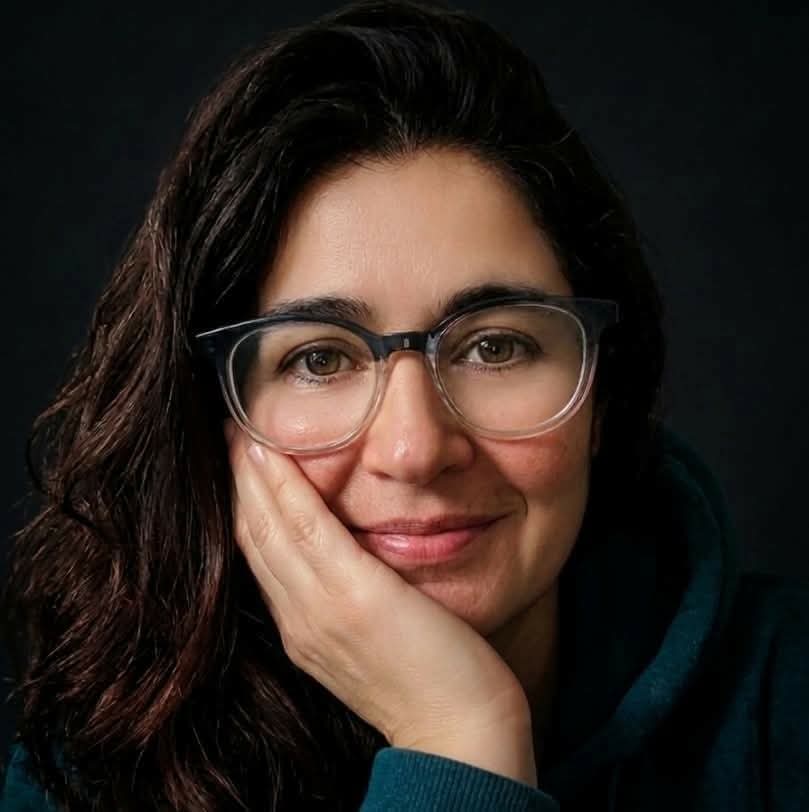
Daniela Sá was born on July 6, 1989; a prolonged birth caused her spastic cerebral palsy, resulting in progressive motor impairment and limited mobility.
On her Instagram, she shares thoughts not only about disability, but also about the state of the world, her faith, her sense of humour, political opinions, and even comments full of irony.
We got to know Daniela a little better:
1. You describe writing as "a therapy, a way to dwell in places of boundary, restlessness and discovery". You have a beautiful line: "We are presidents of our own conscience, we are managers of our own bank of affections. After all, we hold immense power". Would you like to talk a little about who Daniela is, starting from there?
For me, writing is very much a way of organising myself on the inside. There are moments when I don't even know what I'm feeling, and writing helps me understand, to put a name to things. It's a space that's very much my own, almost like a refuge, where I can be truly honest.
That line speaks a lot to that... to realising that, even in the middle of confusion, there's a part of me that gets to choose. I may not control everything that happens to me, but I always have some responsibility over what I do with it, over what I hold on to and what I give to others.
Daniela is someone who feels a lot, who also thinks a lot, and who is constantly under construction. It isn't always easy, but there's a strong will to be truthful, to not run away from what I feel. And writing is that place where I find myself, sometimes where I also confront myself, but deep down, where I always come back to me.
2. You have a genuine fascination with Nature (sunrise and sunset, the sea, plane trails in the sky, the moon, the feeling of freedom when gliding over a pool, your deep respect for animals, plants, the planet, the universe, bacteria and atoms). Do you believe seeing the world from this broader perspective helps you put your daily problems into perspective?
Yes, definitely... and it helps me a lot, especially since I so often suffer in anticipation of things. Nature has that effect on me, it constantly reminds me that there's something much bigger than me and than what I'm feeling in the moment. When I look at the sea, the sky, the moon, or even smaller things, I feel lighter, as if everything gains a different perspective.
It's not that the problems disappear, but they stop taking up so much space inside me. They fall more... into place. I realise everything is passing, that I'm part of something much bigger, and that calms me.
I think that fascination comes from a deep respect for life, in all its forms. And, amid all of it, I manage to re-centre myself, to come back to me, but with more calm and more awareness.
3. "Resilience isn't about being in a hurry. Being resilient is moving forward. At whatever speed that may be" is another one of your lines. On your hardest, saddest days, can you remind yourself that you're still evolving and moving forward, despite any setback?
Not always... there are days when I completely forget that. There are days when it's harder, when all I want to do is stop and stay there. But even on those days, there's something in me that doesn't fully give up.
That line comes very much from that awareness, that resilience isn't about always doing well, or always moving forward with full strength. Sometimes it's just continuing, even very slowly, even without certainties.
I'm slowly reminding myself that continuing is already a lot. That even when it seems like I'm not evolving, there's always something shifting inside. And that helps me be more patient with myself... to respect my own pace and believe that, one way or another, I'm always moving forward.
"When I treat myself with more kindness, everything gets a little lighter".
4. You have a visible disability, which causes you muscle stiffness, pain, and leads you to walk with crutches and occasionally use a wheelchair. When the body doesn't cooperate as well as you'd like, that can cause frustration, disappointment and even episodes of depression. Would you like to talk about how you try to best weave together your physical health with your mental health? It's a journey... it's not something I have figured out. There are days when my body doesn't keep up with what I'd like, and that brings frustration, tiredness, sometimes even deeper sadness. There's no point romanticising that. And, very honestly, there's still some anger in me... especially because my disability isn't linear. There are days when I can do more, others when the body simply won't cooperate, and that unpredictability really affects me. What I'm learning is to listen to myself more. To understand my limits without punishing myself for them. For a long time I fought against my own body, and that only brought me further down. Today I try to do it differently — I try to take care of myself the way I would take care of someone I love very much. Physical health and mental health are completely connected, at least for me. When one falters, the other feels it. So I keep looking for small balances: respecting my pace, giving myself breaks, not demanding of myself what I can't give on a given day. And then there's also the side of accepting... not in the sense of giving up, but of making peace with what is. I'm still in that process, every day. But I believe that, when I treat myself with more kindness, everything gets a little lighter."I believe God also walks with me like this, in my fragility and on my path, even when I don't feel capable myself".
5. One of the things that's a balm for those who believe is faith, and you describe yourself as Catholic, quoting the late Pope Francis (1936-2025) when he said "We are each other's miracle" and "Do not be afraid". Do you believe we can change the world? And that even though it demands the perfection of machines from us, our greatest value as human beings is vulnerability and courage? Yes, I believe we can change the world, but not in the sense of grand or perfect things. I think we change the world mostly through small things, through how we treat others and how we show up for them. Faith, for me, is something very important, but also very complex. My path through faith is very complicated, full of twists and obstacles, and I confess that I often end up turning my back on that calling I feel God makes to me day to day. I also have learning difficulties and was part of the support provided for under Decree-Law No. 54/2018. And that marked my path a lot, including in catechism, which was always hard for me — I only got as far as the 3rd year. I find it very hard to memorise prayers and even today that's difficult for me. And I admit, with some shame, that I don't know them by heart. Often, when I'm in a group, I follow the others... because on my own I get confused, I mix everything up, and that makes me feel insecure. I close myself off a lot into my own world, I'm very much a homebody, and sometimes I really am difficult to deal with. Often even I can't stand myself, and I also recognise that I've treated some people badly. I'm not proud of that, but it's part of my story, and I'm learning from it. But despite everything, faith is still present in me, just in a different way. Maybe not perfect, nor organised, but true. And I believe God also walks with me like this, in my fragility and on my path, even when I don't feel capable myself. 6. You quote Blessed Luigi Novarese: "The sick person can become light for other people, thus transforming the environment in which they live". In a similar way, is speaking openly about living with a disability, at every level, for you a way of breaking with labels, prejudice, and the infantilisation of disabled people? Yes, I think so. Speaking openly about living with a disability is a way of breaking labels and many preconceived ideas that still exist. There's still a lot of prejudice, and also some infantilisation, and that doesn't help anyone. When we talk about this more naturally, it shows that we aren't just our disability. We are people, with good days and bad days, with difficulties, with dreams, with everything anyone else has. That idea from Blessed Luigi Novarese makes sense to me, in the sense that our reality, even with everything difficult it brings, can also have an impact on others. Not out of an obligation to be an example, but because it can help change the way people see things. For me, talking about this is also a way of being more truthful with myself, and of trying to contribute, even a little, to fewer labels and more respect. 7. You experienced bullying during your childhood and youth. How does one make peace with these inner scars? Did they make you grow and be reborn, transforming them into something beautiful? Yes... I suffered a lot at school, but it became more pronounced and serious in my 10th grade year, in 2016, with girls older than me. I've also always had difficulty relating to others and never quite fit into groups. Even with group work, I often preferred to do it alone, because that made me feel safer and more in control of the situation. Even today I have that difficulty relating to others. I was never much of a person to have friends, and I often pushed people away, even when they wanted to help me. I even ended up treating them badly. I think there was a lot of anger in me and I didn't quite know how to deal with it, so I ended up reacting that way. But today it's different... today I like others to like me, and that affects me, sometimes I even suffer over it, because I give a lot of importance to how people see me. Today I still find it very hard to ask for and accept help, but I'm trying to work on that, little by little. Making peace with these scars isn't something immediate. It isn't forgetting, or pretending it didn't happen. For me, it's a process. It's learning to look at it without letting it define who I am today. There were moments when it hurt me a lot and made me doubt myself. But over time, it also forced me to grow in a different way, to understand others better, to be more sensitive, and to value more who I am today. Today I'm on that path of peace with those memories. Not everything is resolved, but they no longer define me the way they used to. 8. You wrote about the Francisco and Jacinta Marto Centre in Fátima: "In that place, I stop being what the world expects of me and go back to being who I really am. No masks. No rush. No titles. Just the essentials: love, surrender and faith." Do religious trips have the power to reconnect you with yourself and help you discover things about yourself you didn't know? Yes, I believe so. For me, religious trips really do have that effect of reconnecting me with myself. I step a little out of the rhythm of daily life, of expectations, of the rush... and that allows me to be more silent with myself. At the Francisco and Jacinta Marto Centre, in Fátima, I feel that a lot. It's as if, in that space, I stop being what the world expects of me and go back to being just me, without masks, without rush, without pressure. Just the essentials: love, surrender and faith. Those experiences help me discover things in myself that, in daily life, end up staying hidden. They also help me re-centre, to better understand what I feel and what truly matters. And they also help me accept myself with everything I am, with my fragilities and my strengths. Deep down, they're moments that bring me more inner peace and a different way of looking at myself and at life."I don't always have to be okay to be evolving".
9. You praise your mother a great deal, who raised you alone, but you don't hide that you've also gone through periods of anger, unhappiness, comparisons, and "what ifs". Does the fact that this isn't a linear journey, and that you have a degenerative disability, with the uncertainty that implies, worsen your emotional regulation? Yes, I think it does worsen it, in a way. The fact that my journey isn't linear, and that I live with a degenerative disability, brings a lot of uncertainty, and that really affects me emotionally. There are days when I'm better and others when I don't know what to expect from my body, and that unpredictability makes me feel more vulnerable, more anxious, and sometimes more down. It isn't easy to manage. There were also periods of anger, unhappiness, comparisons, and a lot of that "what if..." thinking. "What if my life were different?", "What if I didn't have to go through this?" And that also weighs on me. But at the same time, my mother has always been my foundation. She raised me alone, works incredibly hard in the kitchen, and is my greatest support. Even with all our differences, because we're very different, she's my engine. I'm more emotional, she's more practical, and that sometimes clashes, but it also completes us. We're very close, sometimes even too close. I have a strong emotional dependence on her, and I stay home a lot when she's at work. And that also greatly influences how I deal with everything, because my world ends up being more closed off. And I no longer know how to live any other way. Today I'm still learning to deal with all of this. It isn't linear, it isn't perfect, but I'm in a process of trying to better accept the hard days, to be kinder to myself, and to understand that I don't always have to be okay to be evolving.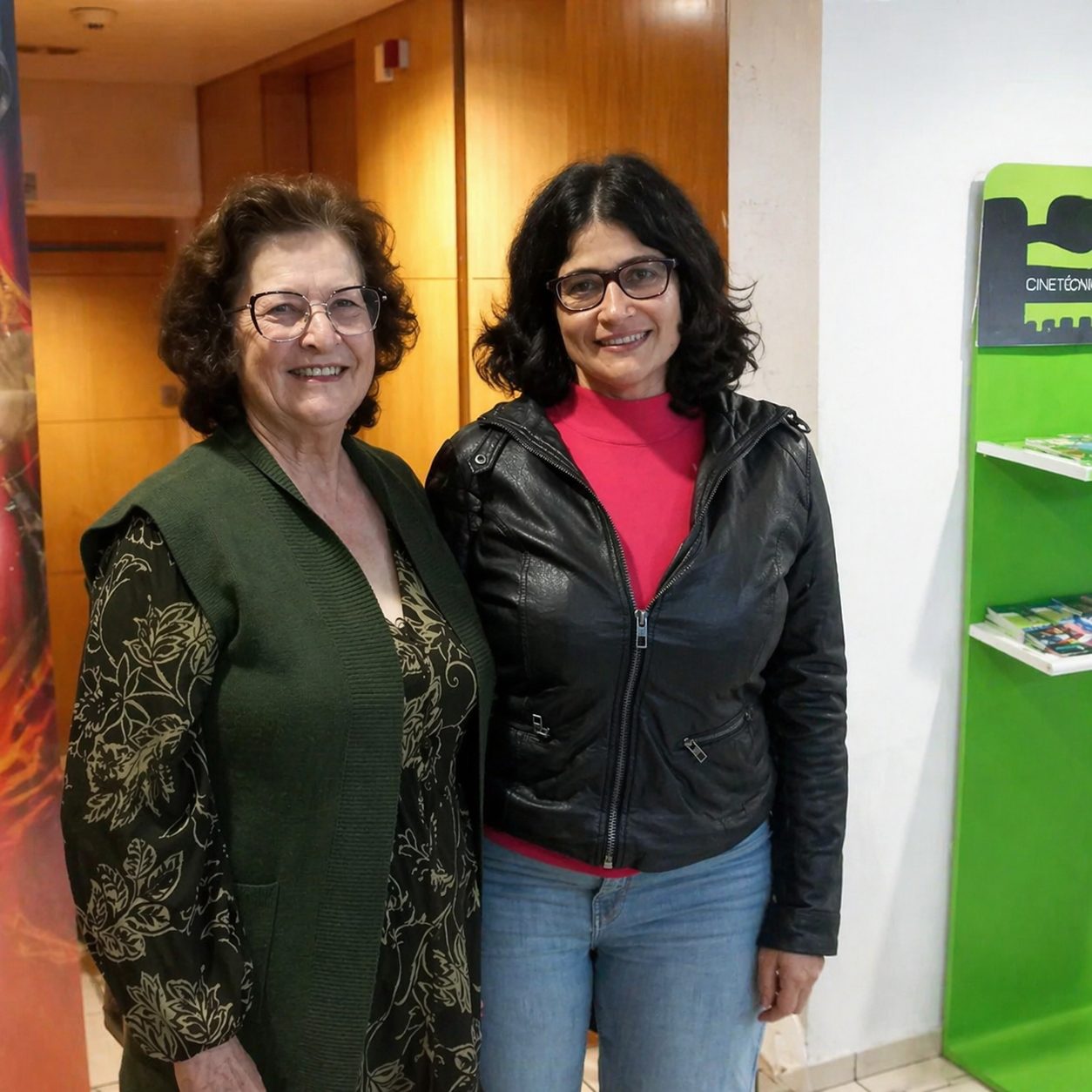
- Daniela and her mother
Paula Cristina Gouveia